Picture it: 2018, MFS Supply. I built myself into a corner.
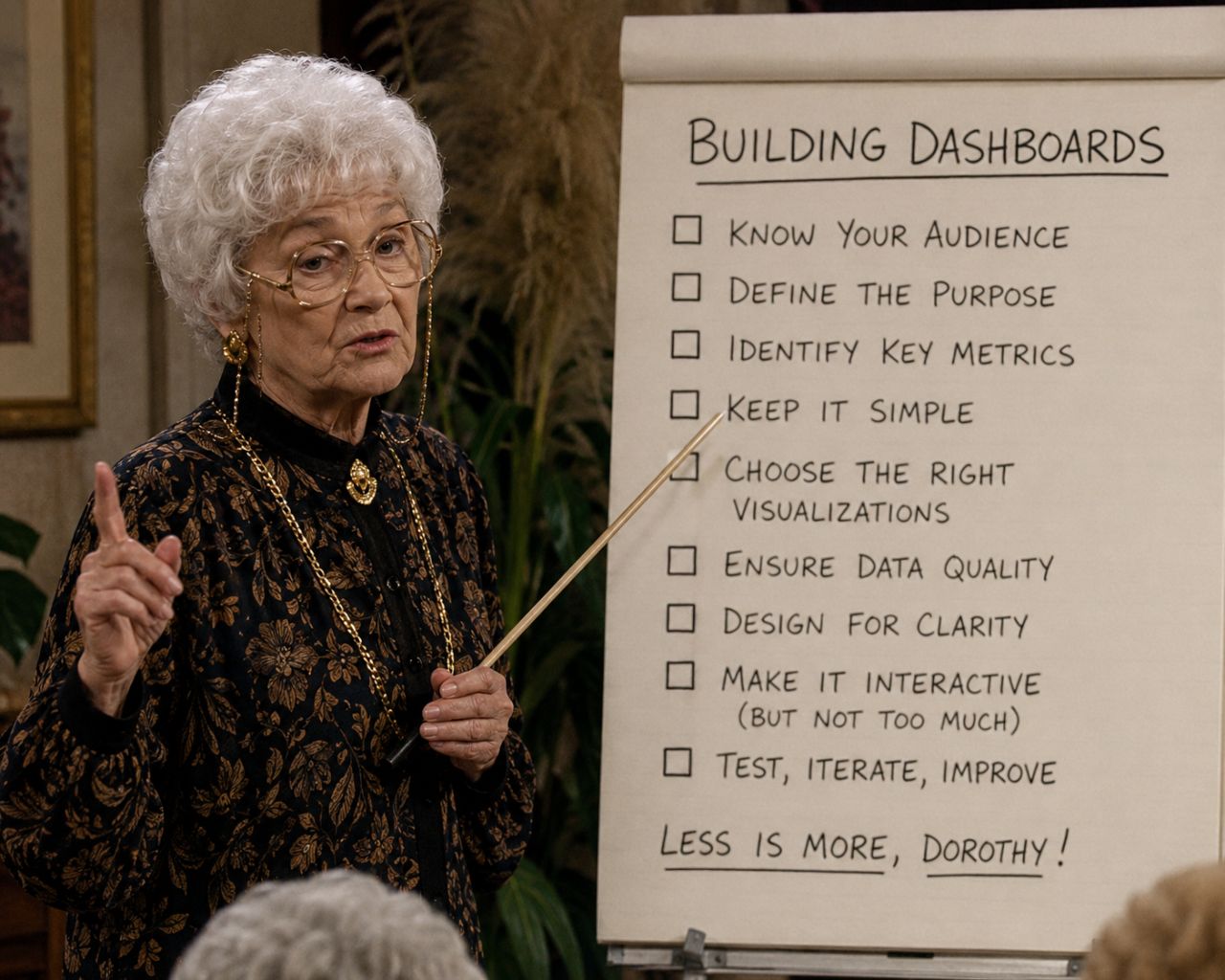
C-suite needed high-level numbers. Weekly view, mostly manual exports. I built it and they loved it.
Then they wanted to see more. More data, different data, cost breakdowns, inventory trends. And more frequently. In that cascade of requests, I realized I was the only person who could update this thing.
The real failure came when I tried to hand it off.
I walked someone through the process. Export from here. Clean up the formatting. Import to there. Cross-reference against the source. Watch for duplicates. Update the lookup table. Run the aggregation. Validate against last month. Refresh the dashboard.
What I got in return was a polite smile and silent confusion, like I was telling a St. Olaf story. I wish I was Dorothy. Dorothy was the most competent person in the room. I had engineered this situation myself.
That’s when it hit: in building a dashboard I created a process that only I understood. And I’d made myself irreplaceable.
Here’s what I got wrong:
I treated it as a one-off. Good enough for this moment, this data, this stakeholder request.
So I cut corners. Manual data pulls instead of pipelines. No documentation. No template. No checklist.
One-offs always scale. Every dash built the same way added another bottleneck.
Some future Dorothy would inherit this mess. My wake is littered with outdated dashes that died because nobody else could touch them. It’s garbage collection, a term from coding referring to memory you forgot to clean up.
This is endemic in martech. Dashboards built in isolation with cowboy coding work until you leave or are asked to update it. Then they become monuments to “good intentions, bad systems.”
What changes:
Build the system first. Dashboard follows.
Template first. Use the same structure for every dashboard: Executive summary, trend section, breakdown, diagnostic, detail. Same every time.
Checklist before publish. Data validation, aggregation, filters, business logic, design, performance, stakeholder alignment. Catch mistakes now.
Document the KPI definitions. Because ‘leads’ means three different things in your organization, and your dashboard is useless if marketing and sales are looking at different numbers without knowing it.
Build for handoff. Write it down and train a backup. Let someone else maintain it.
The hidden checklist: Before you build anything, finish this: “This dashboard helps __ decide __.” Marketing: budget decisions. Sales: pipeline problems. Execs: revenue targets. If you can’t finish it, it’s not focused yet.
The irony: slower upfront, way faster long-term. One dash, one-off approach → you own it forever. Five dashes with systems → someone else handles four of them.
Have you built a dashboard and realized too late that only you understood it? What made you realize? Which Golden Girl are you?